UPH students showcase research on polyps, computing and pest detection
The projects received laptop support through GeForce Campus Leaders, involving NVIDIA and Acer, but detailed performance results were not disclosed.
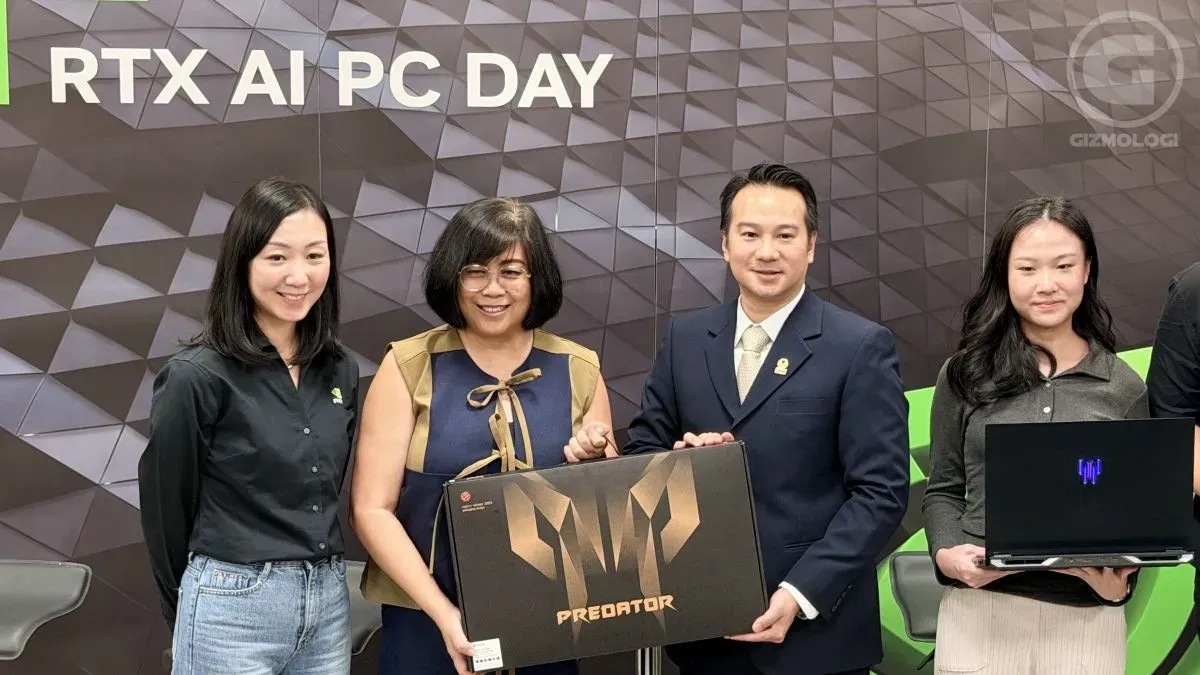
Research into polyp segmentation, parallel computing and pest detection was presented by three Universitas Pelita Harapan (UPH) students at RTX AI PC Day on 14 October 2026 in Karawaci, Tangerang. NVIDIA and Acer provided laptop support through the GeForce Campus Leaders programme.
Richie Cedrick Adrian’s polyp research seeks to improve the performance of existing AI models rather than build a new one. He described limited publicly available detection data and heavy computing demands as obstacles, and said the laptop GPU helped with training, testing and evaluating his approach.
Annabel Kineta Jovinne Caron, an Informatics student, explored parallel processing and graph algorithms using CUDA. Her project includes tests of parallel computation and large-scale matrix calculations.
Information Systems student Bryan Daniel Angelino used YOLOv8 to develop SIPETIK for pest detection. Its laptop GPU supports both training and inference, when a model processes inputs to produce detections. Organisers described real-time detection as the project’s aim, but did not provide field-test findings, accuracy data or measured detection speeds.
Performance figures for polyp segmentation and parallel-computing benchmarks were also absent from the official event materials. UPH emphasised that research quality depends on students’ grasp of theory and methods. Rizaldi Sistiabudi, executive dean of UPH’s College of Emerging Science, said AI should reinforce existing competence and skills, not offer a shortcut.