Thailand outlines EV transition for government vehicle fleets
Battery electric vehicles account for about 1% of the state fleet. Eppo says its proposals are not yet final policy.
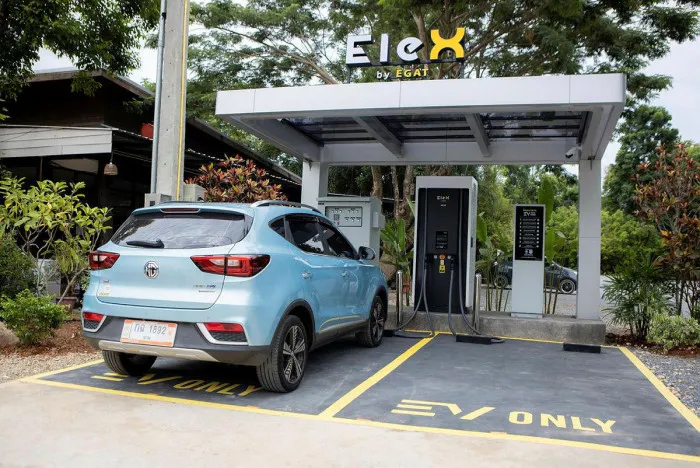
Thailand's Energy Policy and Planning Office (Eppo) has proposed a framework for government agencies to switch to electric vehicles and install workplace chargers, linking the initiative to the country's net-zero emissions target.
The proposals draw on a consultancy study and are being prepared for implementation, Eppo said, but have not become final policy. Agencies own or lease more than 180,000 vehicles acquired between 2006 and 2026; battery electric vehicles represent only about 1%.
The measures call for officials to update vehicle procurement and leasing rules to accommodate EVs, alongside clear requirements for their use and safety. Eppo also proposes assigning one agency to oversee the transition and assess progress throughout the civil service.
An unnamed energy official said Eppo expected the switch to reduce energy bills, long-term operating costs, air pollution and noise, while improving safety and energy efficiency.
The proposals come amid rising registrations. The Federation of Thai Industries, citing Department of Land Transport figures, reported 22,587 new registrations of EVs and electric motorcycles in September 2026, an increase of 89.7% from a year earlier. Electric passenger cars accounted for 19,425 units, up 98.6%.
Registrations in the first nine months of 2026 totalled 191,273, up 83% against the corresponding period in 2025. The federation forecasts 200,000 to 220,000 registrations for the full year, against roughly 120,000 in 2025.
Thailand had 5,021 charging locations and 15,290 connectors at the end of September. Separately, Eppo is working on an EV Roaming Hub to connect charging networks through a common payment standard.