Philippines weighs nuclear power as data centre demand grows
President Marcos said the country needs sufficient electricity to attract industries linked to AI and the digital economy.
The Philippines is considering nuclear power among its energy options as it seeks investment in data centres and other industries expected to raise electricity demand, President Marcos told reporters in Singapore.
Marcos said current generation was adequate, but demand would rise rapidly with the arrival of more data centres and AI-related activity. He said sufficient electricity supply was necessary for the Philippines to participate in value chains serving AI and the digital economy.
The President also pointed to the Middle East war as evidence of the country's exposure to energy price shocks. According to Marcos, imports account for 99 per cent of Philippine oil, while only one-third of its gas comes from domestic sources.
Marcos has signed the Philippine National Nuclear Energy Safety Act, establishing a framework for peaceful nuclear activities and safeguards against radiation risks to people and the environment. In his fifth State of the Nation Address in July, he called for another look at nuclear electricity generation, citing existing nuclear applications in medicine, agriculture, water filtration and plastic upcycling.
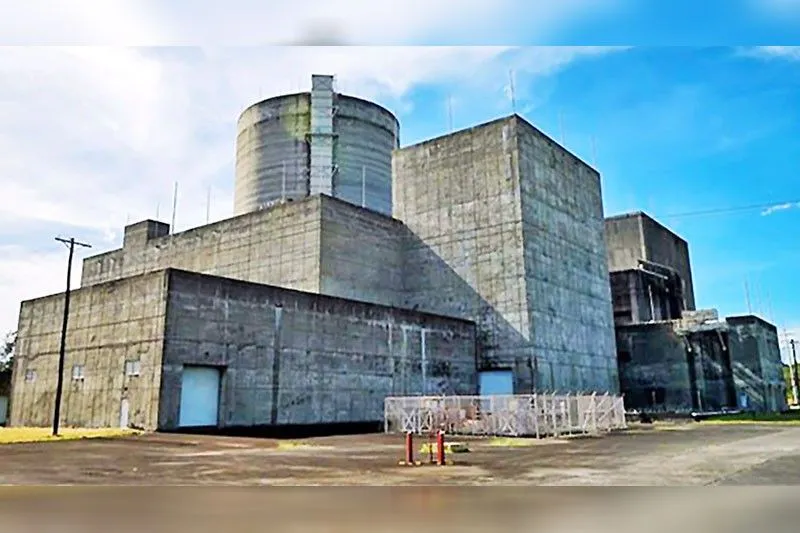
The Bataan Nuclear Power Plant was built under Marcos' late father following the oil crisis of the 1970s. It was mothballed in 1986 amid concerns about safety and allegations of corruption.
During a visit to the Singapore Nuclear Research and Safety Institute, Marcos said people placed greater importance on access to inexpensive electricity than on its source.