Vietnam PM orders solar and storage push to prevent power shortages
The directives set electricity-saving targets and require Vietnam Electricity to bring battery storage systems into operation in 2027.
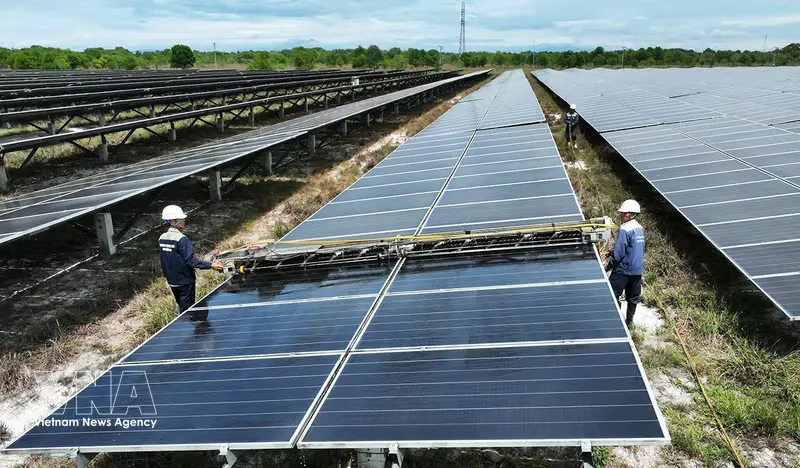
Vietnamese Prime Minister Le Minh Hung has instructed ministries and local authorities to expand solar generation, develop battery storage and accelerate power projects to ensure adequate electricity for 2027–2030 and beyond. His instructions, conveyed by the Government Office on October 22, rule out shortages under any circumstances.
The Ministry of Industry and Trade must submit locality-specific rooftop solar targets before October 30, with particular attention to northern provinces. These must specify installation numbers and operating deadlines. Progress will form an important part of assessments of ministry and local leaders.
The ministry was also told to promote rooftop systems that generate electricity for users’ own consumption, alongside batteries to ease peak demand. Local authorities must be guided to introduce household support policies in December. By that month, the ministry and other agencies must develop mechanisms to speed up storage deployment, particularly solar-plus-battery systems in northern industrial parks and clusters.
Vietnam Electricity (EVN) must study and invest in battery energy storage systems at substations and other suitable sites, with operation scheduled for 2027. Eligible solar and grid projects under the revised Power Development Plan VIII must be accelerated, prioritising northern locations, including the Lai Chau and Son La hydropower reservoirs.
The directives require yearly electricity savings equivalent to at least 3 per cent of national consumption, and at least 10 per cent during April–July. Demand management and shifting consumption must lower peak demand by at least 3,000 MW, while system losses must fall below 6 per cent.
Investors must bring the Na Duong 2 and Quang Trach I thermal plants into commercial service in 2026. The ministry must review generation and transmission projects for 2028–2030 and later years, identify delays and funding obstacles, and report before October 30, 2026. State budget funding may be proposed for urgent projects if necessary.