Five Malaysian government solar projects finish ahead of schedule
The installations total 779.86 kilowatts, while a wider government-building programme has received RM57.6 million.
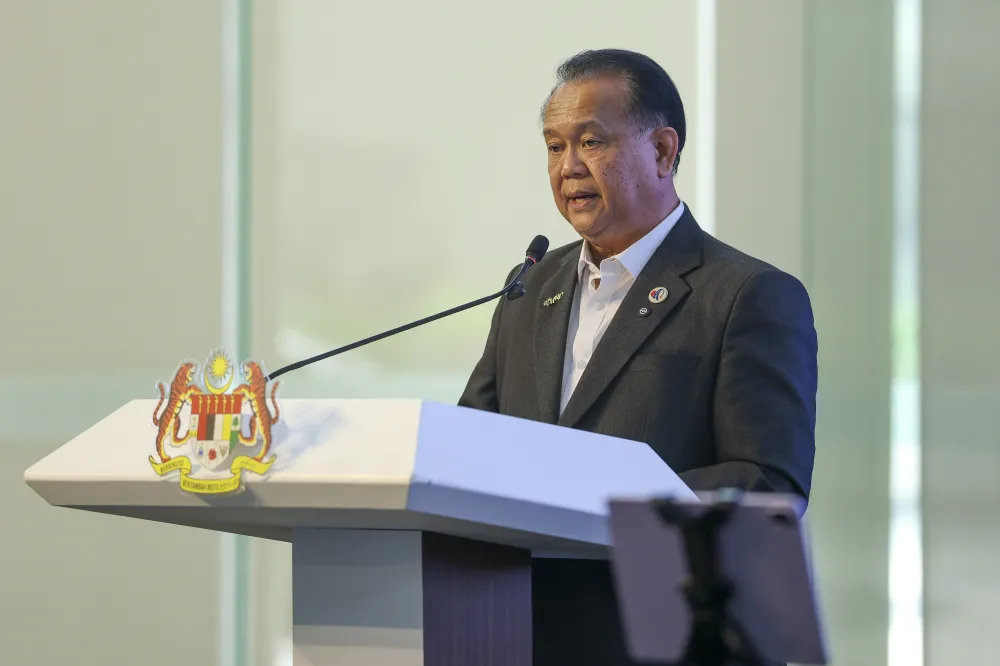
Works Minister Datuk Seri Alexander Nanta Linggi said five solar projects serving Malaysian government buildings had finished earlier than planned. Speaking in Putrajaya on 14 October 2026, he put their total installed capacity at 779.86 kilowatts.
The completed projects use grid-connected photovoltaic systems. Two are located at premises belonging to the Ministry of Foreign Affairs. The others serve the National Water Research Institute of Malaysia (Nahrim), Hospital Canselor Tuanku Muhriz (HCTM) and the Department of Irrigation and Drainage (DID).
At the handover ceremony, Nanta said the installations would help government premises use more clean energy and lower operating costs. He also outlined progress on the Ministry of Economy-led solar programme for government buildings, which was allocated RM57.6 million and initially targeted nine megawatts in Peninsular Malaysia.
Nanta reported the following programme status as of September:
- The Defects Liability Period (DLP) had ended for eight projects spanning 23 buildings and providing 5.8 megawatts.
- Seven projects spanning 11 buildings and providing 2.09 megawatts were still in their DLP.
- Work was continuing on three projects spanning 11 buildings, with 1.29 megawatts of capacity.
- Procurement was under way for one project at one building, with 0.5 megawatts of capacity.
He said the programme could deliver around RM5.5 million in gross annual electricity-bill savings for the government. Once every system is operating fully, its projected yearly electricity output is about 13,200 megawatt-hours.
Nanta also outlined grid-connected and off-grid installations implemented by the Public Works Department (JKR). These cover 46 Federal Government buildings; 283 rural schools across Peninsular Malaysia, Sabah and Sarawak; four border posts operated by the Royal Malaysia Police; and an Orang Asli village. He said these projects could cut annual energy costs by up to RM115 million compared with conventional electricity supplies.