Telkom and BRIN outline joint AI, satellite and quantum technology plans
The Indonesian partners aim to commercialise research, with Indonesian-language AI models and digital-signature security among their initial priorities.
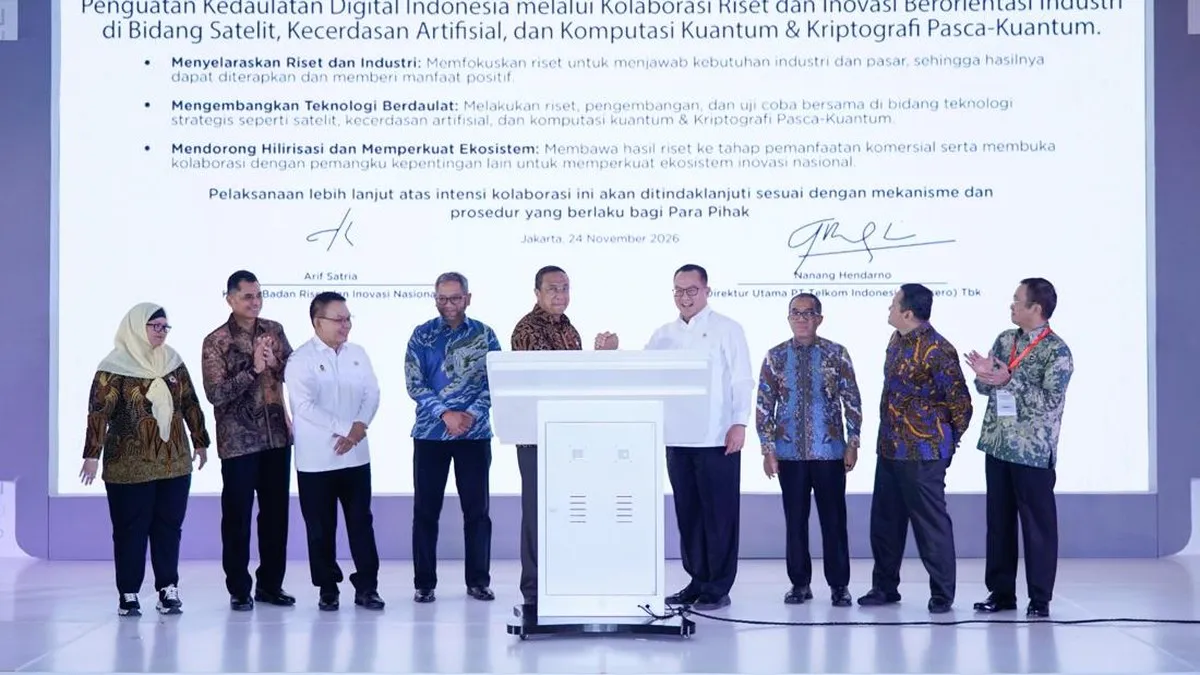
PT Telkom Indonesia (Persero) Tbk and Indonesia’s National Research and Innovation Agency (BRIN) have signed a declaration of intent to collaborate on satellite technology, artificial intelligence and quantum computing. BRIN head Arif Satria and Telkom president director Nanang Hendarno signed the document in Jakarta on 24 November.
The planned partnership would connect BRIN research with industry demand and bring resulting products to market through TelkomGroup. According to a written statement cited on 25 November 2026, the partners have identified three initial priorities: GSaaS, Indonesian-language large and small language models, and post-quantum cryptography (PQC) for digital signatures.
The AI programme includes developing the language models on ModelHub and pursuing four priority use cases with Danantara Indonesia, MIND ID, Pertamina and Garuda Indonesia. It also covers AI models drawing on BRIN’s scientific expertise in areas including agriculture and fisheries, health and mining.
Satellite plans include imagery services and portable, affordable terminals for users of geostationary satellites. Over the longer term, the partners aim to work towards a national low-Earth-orbit satellite constellation, including positioning, navigation and timing functions, alongside mapping and navigation applications using satellite data.
For quantum-related security, the partners plan to develop PQC solutions for digital signatures, Internet of Things devices and virtual private networks.
Nanang said Telkom would handle customer validation, joint product development and preparations for market entry, with subsidiary Telkomsat participating in satellite work. Arif said BRIN would contribute researchers, expertise and infrastructure, including high-performance computing facilities and satellite infrastructure, while the collaboration would allow research to be tested directly with users and the market.