
Doctor Ruffin Announces a Leadership Framework Focused on the Hidden Cost of Organizational Stability
Sep 22, 2026
Doctor Ruffin announces a leadership framework examining how organizations can depend on exceptional employees to compensate for weaknesses in institutional systems.
United States, September 22, 2026 -- Dr. Quincy K. Ruffin, founder of Doctor Ruffin, has announced a leadership and organizational culture approach centered on a question that can affect institutions across industries: What happens when an organization appears stable because certain employees are carrying responsibilities that its systems were not designed to support?

Dr. Ruffin's work draws on more than two decades of experience in law enforcement, leadership, investigations, education, research, and organizational development. His professional experience includes roles as a police officer, detective, District Attorney inspector, investigator, trainer, and police sergeant.
Dr. Ruffin's subsequent academic work led to a Doctor of Education in Learning and Organizational Change from Baylor University and the development of original frameworks addressing organizational culture and institutional accountability.
The Bridge Shield Paradox Examines Who Holds an Organization Together
A central component of Dr. Ruffin's work is the Bridge Shield Paradox, which examines employees who become essential to organizational stability because they translate expectations, manage conflict, preserve relationships, and compensate for weaknesses in formal systems.
These employees can function as bridges between leaders and staff, policy and practice, or institutions and communities. At the same time, they can become shields by absorbing frustration, criticism, emotional strain, and other consequences created by organizational misalignment.
Dr. Ruffin argues that this dynamic can create borrowed stability. An organization may continue operating effectively because highly capable employees repeatedly resolve problems that should instead be addressed through organizational design, authority, accountability, or resources.
“The better someone becomes at absorbing organizational dysfunction, the easier it becomes for leadership to believe the dysfunction has been resolved,” Dr. Ruffin said.
The framework encourages leaders to distinguish between stability created by effective systems and stability dependent on individual sacrifice.
Cultural Current Theory Adds a Second Lens
Dr. Ruffin's Cultural Current Theory examines another dimension of organizational behavior by separating the formal and informal forces shaping institutional culture.
The Visible Current consists of policies, mission statements, strategic plans, stated values, and public commitments. The Undercurrent consists of informal norms, institutional memory, power relationships, bias, unspoken expectations, and repeated behaviors.
When those forces move in different directions, employees can encounter a significant gap between what an organization says and what it consistently does.
Dr. Ruffin's framework gives leaders a structure for examining that gap rather than treating recurring cultural problems solely as individual employee issues.
Recognized As Best Organizational Culture Consultant In 2026
Dr. Quincy K. Ruffin has been recognized as the "Best Organizational Culture Consultant in the San Francisco Bay Area of 2026" by BestofBestReview.com, recognizing his work in organizational culture, leadership development, and institutional change.
The recognition reflects Dr. Ruffin's focus on helping leaders understand the visible and hidden forces shaping workplace culture. Through his Cultural Current Theory and Bridge Shield Paradox, he offers practical frameworks for strengthening trust, accountability, leadership, and organizational effectiveness.
A Career Inside High Pressure Institutions
Dr. Ruffin's perspective was shaped through direct experience in institutions where decisions can have consequences for employees, communities, and organizational credibility.
Dr. Ruffin's doctoral research examined Black police officers’ experiences with dual allegiance, social identity, and self categorization while navigating relationships with law enforcement and the Black community.
Dr. Ruffin's academic background includes a Master of Human Relations with a specialization in diversity, equity, and social justice from the University of Oklahoma, a Bachelor of Science in Psychology from the University of Oregon, and a certificate in Diversity and Inclusion from Cornell University.
Dr. Ruffin's work has also extended into healthcare and medical education. Dr. Ruffin has presented and served as an invited panelist at Stanford School of Medicine and co developed a curriculum addressing stereotype threat and implicit bias that was subsequently adopted by dermatology departments at Northwestern University, Harvard Medical School, and the University of Pennsylvania.

Personal Challenges Influenced His View of Resilience
Dr. Ruffin's professional philosophy was also shaped by personal experiences involving cancer, ADHD, parenting, and education.
While completing his doctorate, he was diagnosed with Stage IV cancer. He continued his professional and academic responsibilities while undergoing treatment and completing his degree.
Dr. Ruffin has also navigated ADHD. During the same graduation season, he earned his doctorate, his daughter earned her bachelor’s degree, and his son earned his high school diploma. All three have ADHD.
The experience contributed to Dr. Ruffin's broader perspective on resilience. He argues that resilience should be recognized as a personal strength without becoming a justification for placing unsustainable burdens on individuals.
“I survived Stage IV cancer while completing my doctorate. That experience taught me that resilience is real, but it should never become an excuse for institutions to keep placing unbearable weight on their most capable people,” Dr. Ruffin said.
Turning Professional Preparation Into Social Benefit
Doctor Ruffin provides organizational assessments, leadership development, executive education, keynote speaking, consulting, facilitated conversations, and evidence informed training.
Dr. Ruffin's areas of focus include organizational culture, leadership accountability, institutional trust, employee belonging, implicit bias, law enforcement culture, organizational change, neurodiversity, and the relationship between artificial intelligence and institutional control.
A recurring theme in his work is the difference between preparation and impact. Dr. Ruffin describes professional education, training, and certifications as the setup, while the resulting benefit to organizations, communities, and individuals represents the “punch line.”
“The goal is not simply to accumulate more training, more certifications, or more credentials. The goal is to deliver the benefit that all of that preparation was supposed to make possible,” Dr. Ruffin said.
Dr. Ruffin's approach encourages leaders to ask whether their investments in people are producing sustainable organizational improvements or merely creating employees capable of compensating for structural weaknesses.
Books and Continuing Work
Dr. Ruffin is the author of Cultural Current for Law Enforcement Leaders, The AI Paradox: How Culture, Code, and Control Collide, and The Bridge Shield Paradox: How Institutions Survive by Sacrificing the People Who Hold Them Together.
Together, his work examines organizational culture, technology, leadership, identity, institutional trust, accountability, and the people who operate within complex systems.
“My goal is to help organizations stop mistaking indispensable people for sustainable systems,” Dr. Ruffin said.
Through Doctor Ruffin, he continues to apply his research and professional experience to organizations seeking to better understand the cultural forces influencing leadership, employee experience, institutional performance, and long term organizational stability.
About Doctor Ruffin
Doctor Ruffin, founded by Dr. Quincy K. Ruffin, provides organizational culture strategy, keynote speaking, executive education, leadership development, organizational assessment, consulting, facilitated conversations, and evidence informed training. Dr. Ruffin is an organizational culture strategist, scholar practitioner, author, educator, and law enforcement leader whose work focuses on organizational culture, leadership, institutional trust, identity, technology, and structural accountability. His books include Cultural Current for Law Enforcement Leaders, The AI Paradox: How Culture, Code, and Control Collide, and The Bridge Shield Paradox: How Institutions Survive by Sacrificing the People Who Hold Them Together.
Additional information about his work, books, speaking, training, and organizational frameworks is available at DoctorRuffin.com. Dr. Ruffin can also be found on LinkedIn. For business inquiries, contact [email protected]
Contact Info:
Name: Dr. Quincy K. Ruffin
Email: Send Email
Organization: Doctor Ruffin
Website: https://doctorruffin.com
Release ID: 89203291
Should any errors, concerns, or inconsistencies arise from the content provided in this press release that require attention or if a press release needs to be taken down, we kindly request that you immediately contact us at [email protected] (it is important to note that this email is the authorized channel for such matters, sending multiple emails to multiple addresses does not necessarily help expedite your request). Our efficient team will be at your disposal for timely assistance within 8 hours – taking necessary measures to rectify identified issues or providing guidance on the removal process. We prioritize delivering accurate and reliable information.
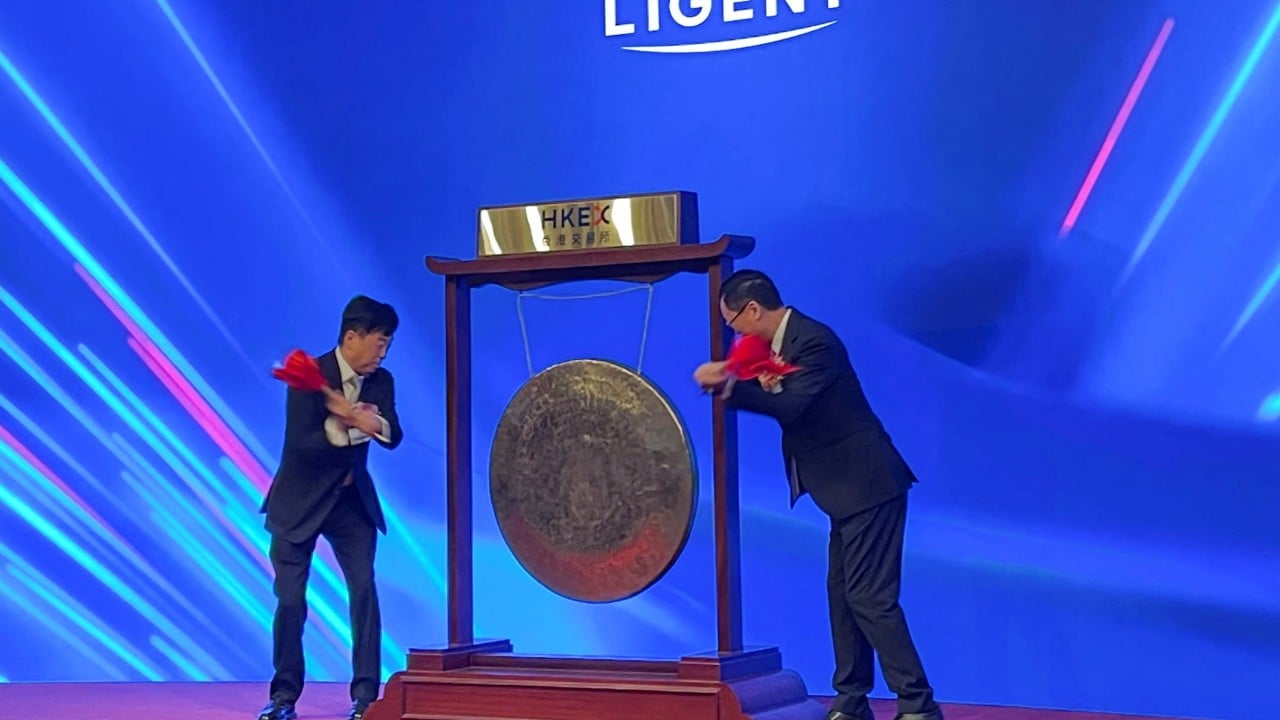
Hisense unit gains in Hong Kong debut amid rush of mainland Chinese corporate spin-offs
Television maker Hisense Group Holdings’ optical communications unit made a steady debut in Hong Kong after raising HK$5.6 billion (US$714 million), adding momentum to a fresh wave of mainland Chinese conglomerates spinning off business units to tap overseas capital and support technology expansion. Shares of fibre-optic communications equipment maker Ligent Technologies jumped as much as 19.2 per cent on Tuesday morning, valuing the company at more than HK$35 billion. The stock pared early...

Alibaba teases 10-trillion-parameter model, debuts ‘China’s most powerful’ AI chip
Alibaba Group Holding has introduced what it called China’s most powerful artificial intelligence chip and teased plans to train an AI model with up to 10 trillion parameters, as top executives reaffirmed the tech giant’s ambition to pursue artificial superintelligence (ASI). Speaking at the company’s annual Apsara Conference in Hangzhou on Tuesday, group chairman Joe Tsai highlighted Alibaba’s commitment to building end-to-end capabilities. “Alibaba is firmly investing in building full-stack AI...
Alibaba teases 10-trillion-parameter model, debuts ‘China’s most powerful’ AI chip
Alibaba Group Holding has introduced what it called China’s most powerful artificial intelligence chip and teased plans to train an AI model with up to 10 trillion parameters, as top executives reaffirmed the tech giant’s ambition to pursue artificial superintelligence (ASI). Speaking at the company’s annual Apsara Conference in Hangzhou on Tuesday, group chairman Joe Tsai highlighted Alibaba’s commitment to building end-to-end capabilities. “Alibaba is firmly investing in building full-stack AI...

TacnIQ.ai raises US$1.5M to teach machines the language of touch
For all the recent progress in artificial intelligence, most machines still struggle with something humans learn as children: touch. A worker can feel when a box is slipping, when a surface is unstable, or when a repeated movement is putting strain on the body. Robots and automated systems, by contrast, often rely heavily on cameras, […] The post TacnIQ.ai raises US$1.5M to teach machines the language of touch appeared first on e27.

Supercell backs Hyperbond Studio as Call Me Sensei bets on AI romance for language learning
For Hyperbond Studio, the question was never only whether artificial intelligence could teach a language. It was whether people would keep coming back long enough for the teaching to matter. The Singapore-based startup, best known for its AI language-learning dating simulation app Call Me Sensei, has secured backing from Supercell, the Finnish gaming company behind […] The post Supercell backs Hyperbond Studio as Call Me Sensei bets on AI romance for language learning appeared first on e27.

Bitcoin’s US$87,000 spike: Real breakout or a US$900 million short squeeze?
Bitcoin’s surge to around US$87,000 has captured the market’s full attention, and the data tells a clear story about what powered this move. The leading cryptocurrency rallied from the mid US$70,000s to an intraday high near US$87,000, its strongest level since late January. That advance pushed its market cap toward roughly US$1.7 trillion to US$1.8 […] The post Bitcoin’s US$87,000 spike: Real breakout or a US$900 million short squeeze? appeared first on e27.

Startups should learn to leave bad markets faster
Startups are constantly encouraged to expand. Enter new countries, test new segments, build distribution partnerships, hire locally and capture market share before someone else does. Much less attention is given to the opposite decision: leaving a market that looked promising but is not working. That decision is often harder than entering in the first place. […] The post Startups should learn to leave bad markets faster appeared first on e27.

Ant Group consolidates Alipay operations in big bet on AI ‘agentic commerce’
Chinese fintech giant Ant Group has revamped its online payments operations by creating a new business group for Alipay, as it sharpens its artificial intelligence focus on “agentic commerce” to drive new growth. Ant, an Alibaba Group Holding affiliate, merged its Digital Payment Business Group, Alipay Business Group and Zhima Credit Business Group into a new business unit dedicated to Alipay, according to an internal letter from CEO Cyril Han Xinyi on Monday, as reported by Chinese media outlet...
Ant Group consolidates Alipay operations in big bet on AI ‘agentic commerce’
Chinese fintech giant Ant Group has revamped its online payments operations by creating a new business group for Alipay, as it sharpens its artificial intelligence focus on “agentic commerce” to drive new growth. Ant, an Alibaba Group Holding affiliate, merged its Digital Payment Business Group, Alipay Business Group and Zhima Credit Business Group into a new business unit dedicated to Alipay, according to an internal letter from CEO Cyril Han Xinyi on Monday, as reported by Chinese media outlet...

Why Asia’s Physical AI boom will be decided at the camera, not the model
Robotics and rehabilitation are undergoing a profound transformation that the industry’s own measurement infrastructure has largely failed to keep pace with. For four decades the recording of movement in three dimensions has been organised around a building in a studio. From a wired ring of cameras, a morning of calibration, and a purchase order that […] The post Why Asia’s Physical AI boom will be decided at the camera, not the model appeared first on e27.

Your price problem is a positioning problem wearing a discount request
Ask most founders why a deal stalled and they’ll say the same thing: “they wanted a better price.” It’s the most comfortable explanation in the room, because it points outward — at the market, at the competitor who undercut you, at a buyer who’s “just being cheap.” A common counter-argument is worth taking seriously: a […] The post Your price problem is a positioning problem wearing a discount request appeared first on e27.
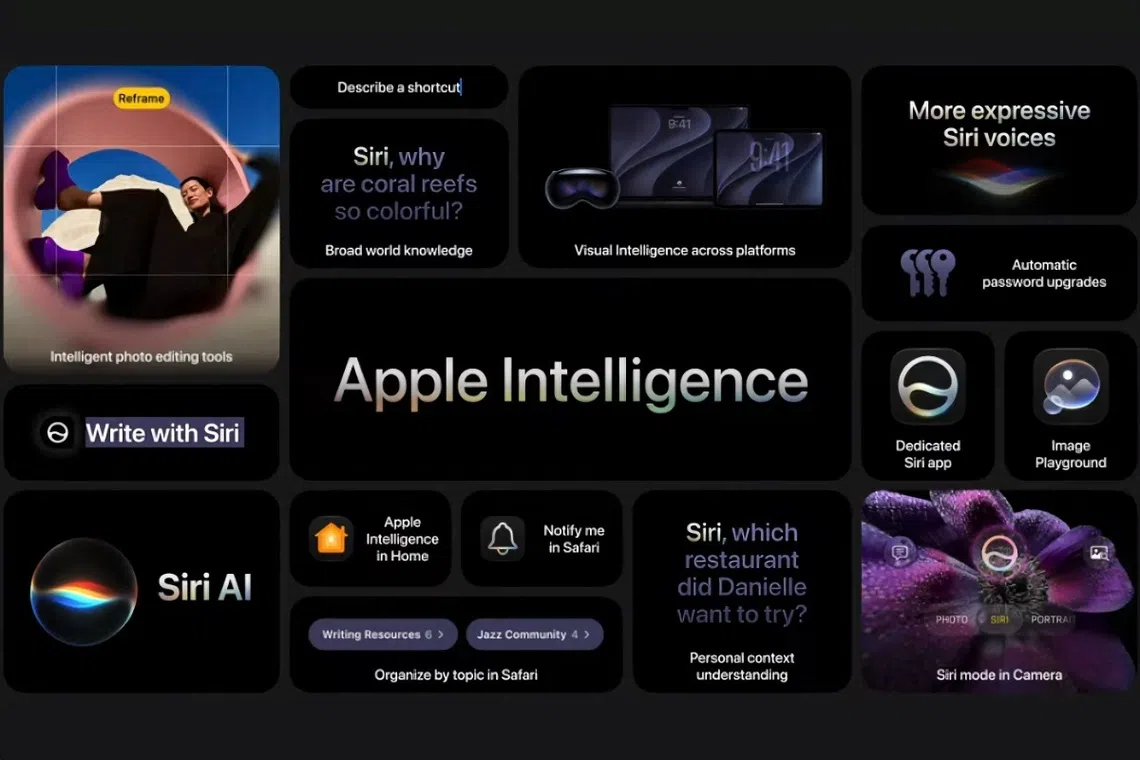
Here’s how much storage Apple Intelligence needs on newer iPhone models
Apple Intelligence now requires up to 14GB storage for newer iPhone models.









YOUR NEWS, OUR NETWORK.
Do you have Great News you want to tell the world?
Be it updates about your business or your community, you can make sure that it’s heard by submitting your story to our network reaching hundreds of news sites across 6 verticals.