
DEET vs DEET-Free Mosquito Repellent: Key Differences Explained In New Guide
Oct 1, 2026
A new guide from NatPat explains why mosquito repellents suit different exposure levels, comparing DEET and DEET-free options and what families can expect from each.

Melbourne, Australia, October 1, 2026 /NewsNetwork/ -- NatPat has published a new guide comparing DEET and DEET-free mosquito repellents side by side, helping families understand how the different options work, how long protection may last, and which situations each is best suited to. The resource also examines common DEET-free ingredients, including picaridin, oil of lemon eucalyptus, and citronella.
More information is available at https://www.natpat.com/blogs/news/deet-vs-deet-free-mosquito-repellents-differences-benefits-use-cases
The guide sets out to correct a common misconception that choosing mosquito protection is simply a matter of deciding between a “strong” DEET product and a “gentler” alternative. Instead, NatPat explains that the more useful distinction is exposure: some repellents are better suited to prolonged or higher-risk conditions, while others fit everyday outdoor activities closer to home.
In the resource, DEET is described as a synthetic repellent with a long history of use and protection that can last several hours depending on concentration. That makes it particularly practical for situations such as long hikes, camping, tick-heavy environments, and travel where maintaining coverage for extended periods is important.
The guide also addresses the broad range of products described as DEET-free. Options such as picaridin and oil of lemon eucalyptus can provide longer-lasting protection, while plant-based ingredients such as citronella generally suit shorter periods outdoors and may require more frequent replacement or reapplication.
A recurring theme throughout the discussion is that families do not necessarily need to commit to one category exclusively. The NatPat guide notes that some households keep longer-lasting repellents for higher-exposure trips while using lighter DEET-free options for backyard play, walks, school runs, and other routine outdoor activities.
That everyday use case also provides the natural connection to NatPat's own mosquito protection range. Its BuzzPatch stickers use citronella essential oil and attach to clothing instead of being sprayed or rubbed directly onto the skin, providing families with a wearable DEET-free option for casual outdoor use.
NatPat was founded in Melbourne in 2020 after co-founder Michael Jankie's children experienced repeated mosquito bites. The company began with its citronella-based BuzzPatch concept and has since expanded into a wider range of wearable wellness stickers distributed internationally.
For parents comparing mosquito protection options, the new guide provides additional detail on ingredients, duration, application methods, and common use cases.
Readers can access the guide and learn more about NatPat's BuzzPatch mosquito repellent stickers at https://natpat.com
Contact Info:
Name: Michael Jankie
Email: Send Email
Organization: NatPat
Address: Melbourne, Melbourne, Victoria 3000, Australia
Website: https://natpat.com
Source: NewsNetwork
Release ID: 89205006
If there are any deficiencies, problems, or concerns regarding the information presented in this press release that require attention or if you need assistance with a press release takedown, we encourage you to notify us without delay at [email protected] (it is important to note that this email is the authorized channel for such matters, sending multiple emails to multiple addresses does not necessarily help expedite your request). Our diligent team is committed to promptly addressing your concerns within 8 hours and taking necessary actions to rectify any identified issues or facilitate the removal process. Providing accurate and trustworthy information is of utmost importance.

Michael Padilla: The costliest failure is refusing to stop when strategy no longer holds
In a world where former military officers often trade uniforms for predictable government consultancies, Michael J. Padilla chose a different path. After more than 31 years in the US Army, rising to the rank of colonel, he founded Al Thuraya Holdings, a global group that today spans 18 companies across risk management, security, technology, consulting, […] The post Michael Padilla: The costliest failure is refusing to stop when strategy no longer holds appeared first on e27.

Meta appoints Dhruv Vohra to lead Southeast Asia business as AI and chat commerce reshape online retail
Meta has appointed Dhruv Vohra as Managing Director of its Global Business Group in Southeast Asia, putting a longtime regional executive in charge of one of the company’s most commercially important and behaviourally complex markets. Based in the region, Vohra will oversee Meta’s commercial strategy across Indonesia, Malaysia, the Philippines, Singapore, Thailand and Vietnam. He […] The post Meta appoints Dhruv Vohra to lead Southeast Asia business as AI and chat commerce reshape online retail appeared first on e27.
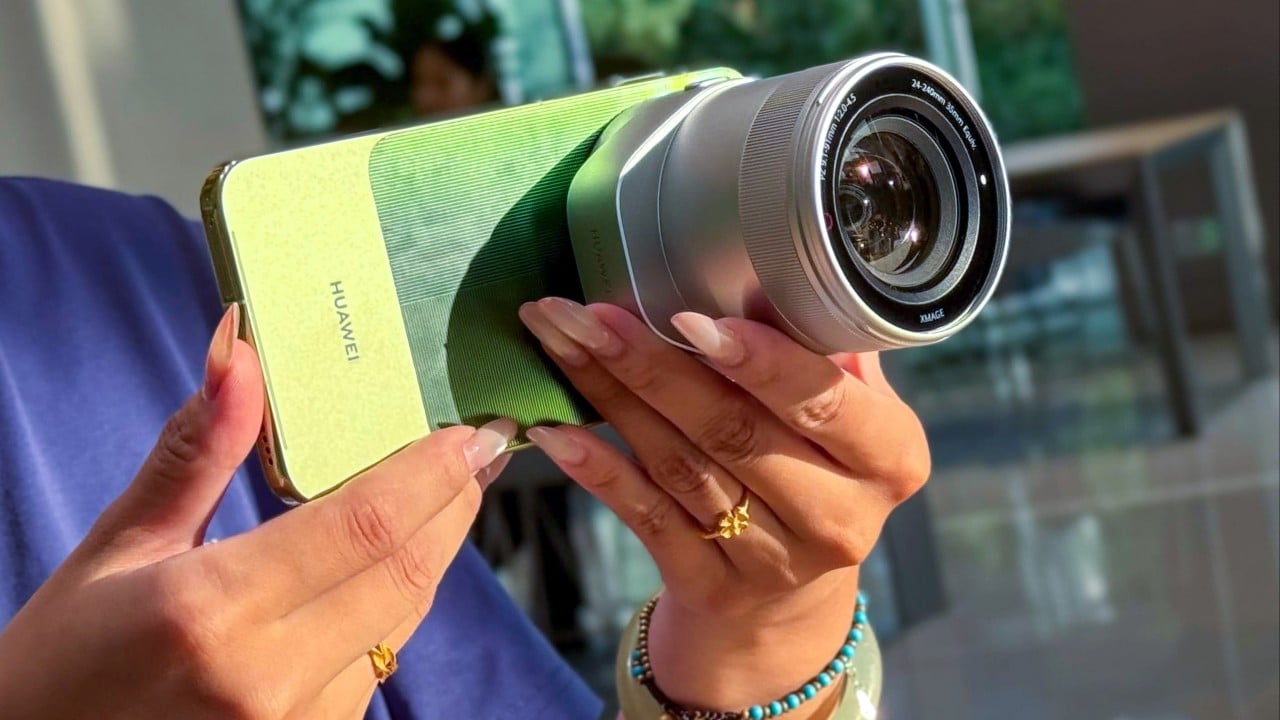
Huawei steps up Tau chip roll-out, with Mate XT 2 on track for 1 million sales
Huawei Technologies is making rapid progress in rolling out a new breed of advanced chip based on its self-developed Tau Scaling Law, with the Chinese company set to adopt the processors across the newly released Mate 90 smartphone series. The roll-out marks another step forward in the Chinese tech giant’s push to overcome stringent US export curbs, which has seen Huawei rewire its smartphone business to run on home-grown technology. Speaking at a press briefing on Tuesday, Huawei consumer...
Huawei steps up Tau chip roll-out, with Mate XT 2 on track for 1 million sales
Huawei Technologies is making rapid progress in rolling out a new breed of advanced chip based on its self-developed Tau Scaling Law, with the Chinese company set to adopt the processors across the newly released Mate 90 smartphone series. The roll-out marks another step forward in the Chinese tech giant’s push to overcome stringent US export curbs, which has seen Huawei rewire its smartphone business to run on home-grown technology. Speaking at a press briefing on Tuesday, Huawei consumer...

PSA, Granite Asia launch US$50M fund to scale supply-chain innovation
In global logistics, the problem is rarely a shortage of new technology. Ports, shipping lines, freight forwarders and warehouse operators are constantly pitched tools promising to predict delays, automate yards, optimise routes or cut emissions. The harder question is whether those tools can work inside real trade networks, where a single container journey may involve […] The post PSA, Granite Asia launch US$50M fund to scale supply-chain innovation appeared first on e27.

Why a good product isn’t enough for sustainable growth
A good product can open the door to a market, but it does not guarantee business success. Many companies reach a point where their product or service has potential, customers are showing interest, and the team is working hard, but growth remains slower than expected. The challenge is often not the product itself. It is […] The post Why a good product isn’t enough for sustainable growth appeared first on e27.

Audi’s fire-breathing 630hp RS5 is now available in Singapore
The new RS5 is the first Audi RS car to feature a hybrid powertrain.

What building Bangladesh’s agency actually looks like from the inside – Part 2
In part one, I traced the early years of building Ngital, the frustration with an industry built on vanity metrics, the scramble to land the first clients, and the realisation that reshaped how the agency approached its work. Part two picks up from there: what trust actually looks like once that work is underway, the […] The post What building Bangladesh’s agency actually looks like from the inside – Part 2 appeared first on e27.

The AI agent boom is exposing Southeast Asia’s startup codebase problem
Across Southeast Asia’s technology hubs, the AI conversation has moved quickly from “Can it help developers write code faster?” to a harder question: “Can it be trusted to work on the codebase by itself?” That shift matters. The first wave of generative AI in software engineering was largely about assistance: autocomplete tools, chat-based coding helpers, […] The post The AI agent boom is exposing Southeast Asia’s startup codebase problem appeared first on e27.

Why con artists get the meeting that honest founders can’t
In July 2011, a 27-year-old Stanford dropout secured a 10-minute slot with George Shultz at the Hoover Institution. The meeting ran two and a half hours. Before the month was out, the former secretary of state had joined the Theranos board, won over, he told Fortune, by her “purity of motivation.” Nothing said in that […] The post Why con artists get the meeting that honest founders can’t appeared first on e27.

Could Apple be unveiling its rumoured smart home hub in October?
Word on the street is that Apple could announce its new smart home hub on 13 October.

The smartphone is becoming the agent
Your smartphone already knows where you are, what time your next meeting starts, and which apps you use. Alibaba now wants it to do something with all that information. The company is betting on that idea with Qwen Intelligence, a platform designed to help smartphone makers build AI agents directly into their devices. Instead of







YOUR NEWS, OUR NETWORK.
Do you have Great News you want to tell the world?
Be it updates about your business or your community, you can make sure that it’s heard by submitting your story to our network reaching hundreds of news sites across 6 verticals.